
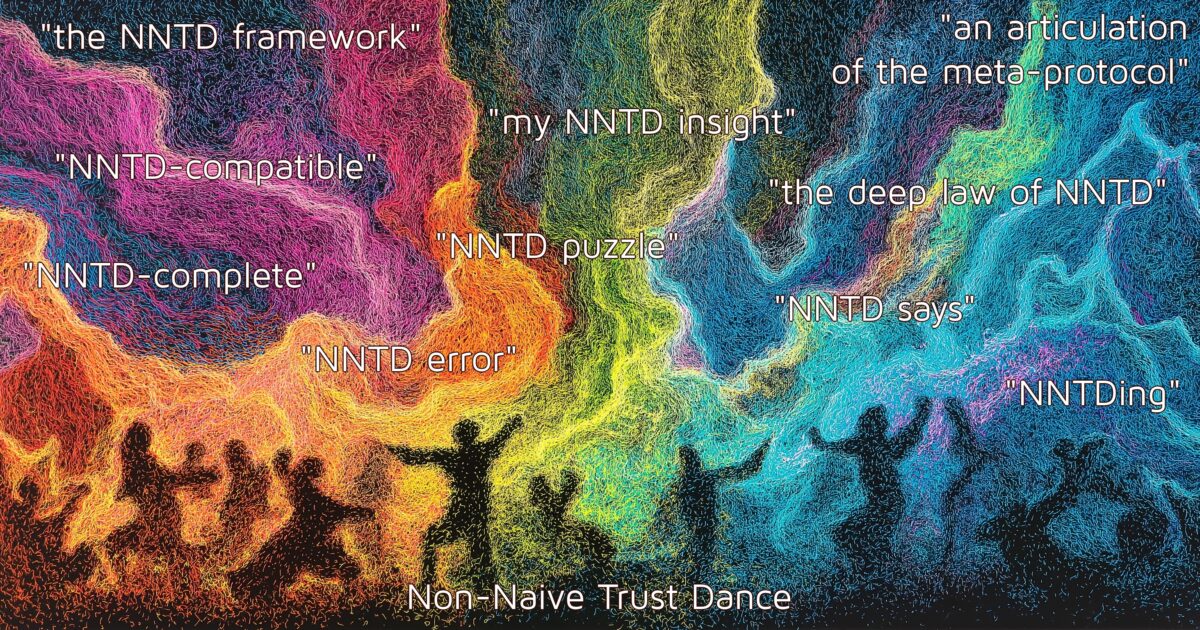
The “Non-Naive Trust Dance” is, at present, the main topic of this site, malcolmocean.com, albeit obliquely (only some of the relevant posts use “NNTD” or even the word “trust”, but even many of the ones that don’t are still pointing at it or generated by it). It’s a bit of an overloaded term, ie a term that means a slightly different thing depending on context. These usages below are non-exclusive—often it means several at once!
Usually, it is: my bespoke personal insight, framework, a generally-available insight, a perspective, a practice, or a deep law. Sometimes it’s a game or a process.
So I figured it might be helpful to investigate these and make them a bit more explicit.
Generally, on my blog, I mostly refer to NNTD, because it’s not in the commonground space between us—I’m forever explaining it again. But in general we don’t actually usually learn words by reading explanations or definitions. We learn them by seeing them used.
So for this post, I’ve done an archaeological dig to include quotes where I’ve just used the phrase “NNTD” as part of my thinking/journalling or communicating with someone else who already gets it well enough for that to work (often my friend and collaborator Michael Smith, whose NNTD intro you can read here.)
It’s a funny time to write this: I’ve been seriously thinking about renaming the framework. I’m confident that “trust” and “trust-dancing” continue to be central to my thinking, but the core of what I’m trying to say isn’t that well-captured by “non-naive trust”. Better would be “non-fake trust” or “non-pretend trust” or “non-bullshit trust”, perhaps. If I do rename things, this blog post will help archaeologically translate earlier ones; if not, it’ll help disambiguate when people keep asking “wait what exactly does NNTD mean?”
Sometimes NNTD means “a particular insight Malcolm Ocean had in 2020”. Unverified personal gnosis.
I’ve found it helpful, for understanding the nature of insights, to reference a frame John Vervaeke uses (tho he probably got it elsewhere—Piaget?) of insight being what happens when you go from systematically making a certain class of error or mistake, to systematically NOT making it. This very much fits that quality, although also it hasn’t propagated fully into my system, so while I’m always capable of identifying the error, I still do sometimes make it.
I’ve found references in my notes/messages to “before NNTD” or “since NNTD”, and these all refer to that insight. I often treat it as if it happened in a distinct moment in July—and it’s true there was a particular internal coup and new worldview order established then, but the first clues showed up in March, and the seeds were sown the previous year with BioEmotive and Unlocking the Emotional Brain.
Sometimes NNTD means “the whole framework Malcolm developed based on that insight”, including theories, practices, phrases, etc. Put a different way, NNTD feels kind of like a body of work. I certainly speak of “my NNTD writing”.
Sometimes, I would say somewhat accidentally, I’ve lumped under NNTD “all of the subsequent ways in which Malcolm came to have his own perspective on culture stuff, following that insight”. I wrote about the feeling of an iron curtain falling away in my mind such that I could now develop my own views about what’s going on with culture, group flow, etc. And that framework/worldview is personal and particular, and is not the core insight.
About a year ago I texted Michael and wrote:
shared this convo recording of me & Jess with you. the first chunk involves us exploring some of the tradeoffs I made in developing NNTD in the context of what I needed it to do while I was trying to relate to Jean/LSA. and directions for it to mature more.
it feels like a cool moment in my development to be able to differentiate “NNTD as I’ve constructed it” and “my best sense of things”
That’s definitely taking it as a framework with limitations, not simply a self-evident deep law. I don’t expect the law to be violated, but I do expect to realize ways in which I was confused about its limitations.
I’ve recently re-read some of my early journal entries about it, and discovered that in those first weeks/months I often referred to “the NNTD”, not just “NNTD”. eg phrases like “how would I know that someone grokked the NNTD really deeply” and “that was good practice in the NNTD” and “an actual written intro to the NNTD”. Vibes NNTD as a phenomenon. Whereas now I would still say all these phrases but with no “the”.
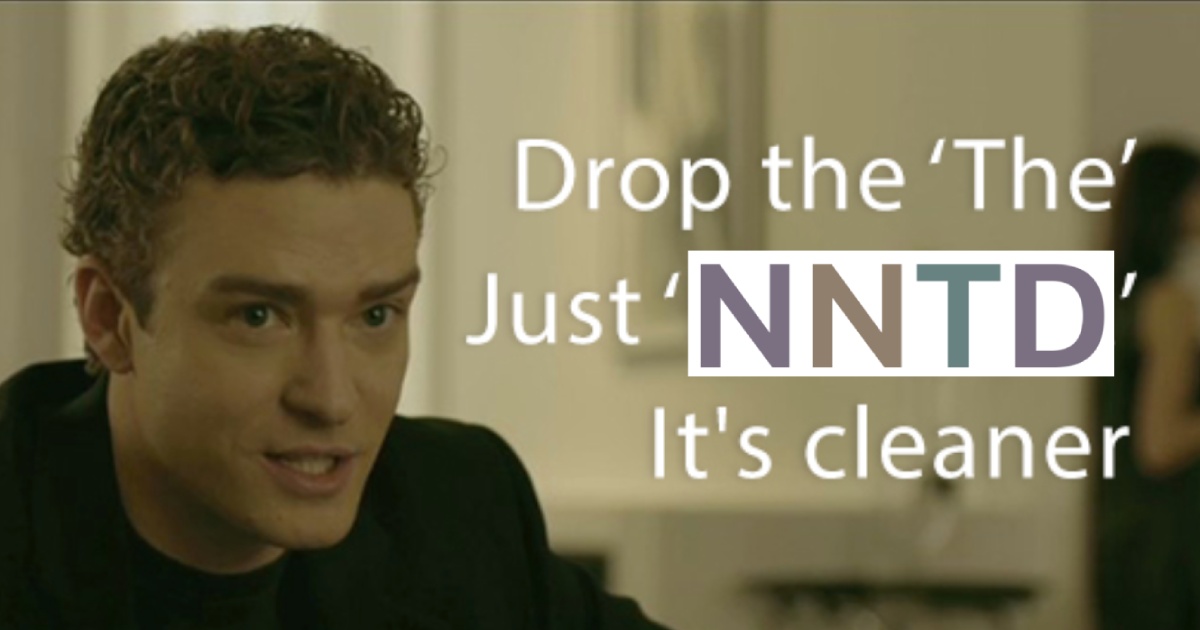
Interestingly, I still use the word “the” in front of the word “metaprotocol”.
One of the things I regularly say about “NNTD” is that it’s an articulation of the meta-protocol (or instantiation thereof or angle thereon). What’s the meta-protocol? It’s the thing you use when your protocols have broken down, or proven inadequate or not-agreed-upon.
Why is it “the metaprotocol” and not “a metaprotocol”?

The idea is that there are some mathematically universal design constraints for how navigating gaps between shared frameworks/cultures/protocols must necessarily work. They don’t tell you what local particulars to construct to handle it, but they CAN tell you what won’t work. Like how there are a few ways to maximize the surface area to volume ratio between a gas and a solid, which is why lungs and trees have the same shape. It’s not a coincidence.
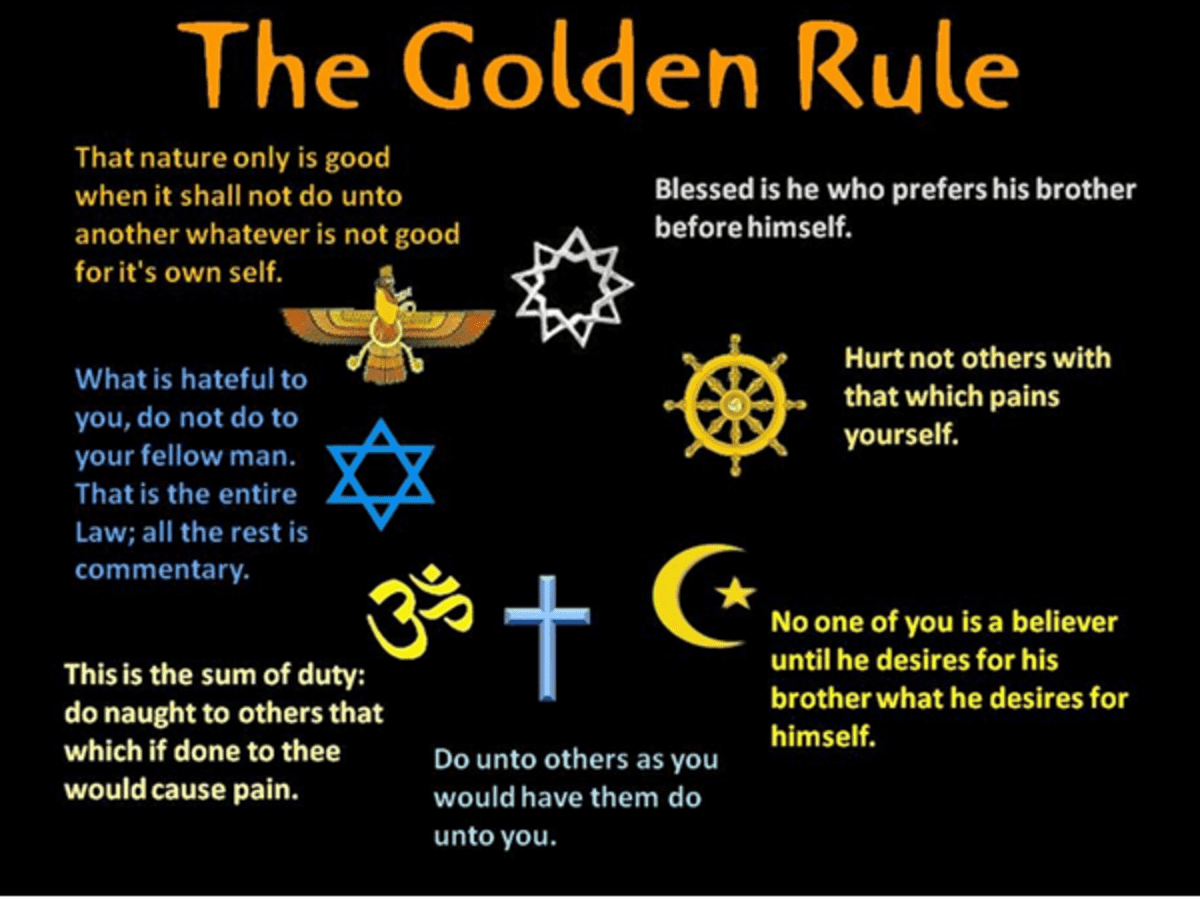
There’s therefore a convergent fact-of-the-matter of reality about these constraints, which is the source of the substantial amount of overlap there is between different religious and non-religious meta-ethical frameworks: the golden rule, etc. The golden rule can form part of a protocol, but unlike “shake hands” it points at something more general, in part because it can help you navigate even when someone else is not following it, whereas protocols break down.
Anyway! I discovered the NNTD about the same month as I heard Jordan Hall talk about the meta-protocol, and it was immediately very obvious that we were speaking of the same thing. My sense is that initially I was essentially using the two interchangeably, which is part of why I was referring to it as “the NNTD”.
But as time went on, part of what my own particular NNTD lens on the metaprotocol puzzle drove me to want to point out to people is the way in which each person has a different sense of the metaprotocol, and that we should expect some overlap but not immediate clear identity. I wrote about that most clearly in Open letter: Convening an Ontario meta-protocol jam:
The term “meta-protocol” is used by me and Jordan Hall and others, to refer to the way-of-being-and-relating that allows differences at any scale to be held and integrated. The meta-protocol is always in development, never finished, although (as far as I can tell) at any given moment, embodying your best understanding of the meta-protocol and developing the meta-protocol are the same move. And holding this stance is in a sense the best we can do, although our best gets better as we learn and grow.
It seems to me that: Jean Robertson’s Collaborative Circle (+C&As, etc) is one lens or one approach to embodying & developing the meta-protocol.
It seems to me that: Malcolm Ocean’s Non-Naive Trust Dance (NNTD) is another such lens/approach.
It seems to me that: Michael Smith’s 3rd Generation Memetic OS is a third take.
It seems to me that: Arbinger Institute’s Outward Mindset is another.
It seems to me that: Marilee Adams’s Learner Mindset is yet another.It seems to me that: in some very important sense, there are at least as many unique takes on the meta-protocol as there are people, although they don’t all have their own names, and they don’t all know how to recognize each other.
The core insight of NNTD seems to me to be a deepening or generalization of the theory of mind insight that kids generally have around age 4, prior to which they seem to… not manage to recognize that they can know something about the state of the world that someone else doesn’t know, or vice versa. Prior to this, if they see what’s in an opaque container, they act/speak/think as if others will also know what’s in the container, even if they have all the information they need to infer that the other person will not know. My friend Michael theorizes that this may imply that they haven’t developed the idea of distinct “knowers” and are instead orienting implicitly simply to “what is known”.
I sometimes refer to the NNTD insight as “advanced theory of mind”. I suspect there are many more advanced stages of theory of mind though, and that the skill tree is not linear.
The NNTD insight, in this sense, corresponds to the realization: “just because I trust X, does not mean someone else can/should trust X”. Many people will agree with this sentiment in principle (I wonder if that’s also true of 3yo children!?) but when faced with somebody else distrusting them in some way or trusting something they trust very deeply, become uncomfortable and have trouble recognizing that their trust and the other persons’s trust are just completely different phenomena, and them being different does not contradict anything whatsoever.
A different angle on this same insight is that you can’t skip the process of coming to trust something (by analogy, you can’t skip the process of coming to know a fact—each knower of it has to actually learn it). Thus you can’t trust what you can’t trust. If you have distrust, you can at most pretend to trust, or compartmentalize away your distrust.
If someone gets this insight—on a gut/bones level, not just conceptually—did they get the same insight as I did in 2020? Leaving aside the part where same is very difficult to define… well… I previously might have thought no, because I’d see them still not seeing all of the other implications that came along with my insight, but with some hindsight it feels much more likely to me that those implications were actually the result of combining the general advanced-theory-of-mind NNTD insight with a ton of other stuff I was on about like collective consciousness or synergic mode. But in any case, I therefore tend to equivocate a lot about whether a given other person “gets” NNTD because of this. But I’ve sync’d up with a few people who seem to get some chunk of it at least.
It answered a particularly hairy question I’d been torn up about for years about theory of change for groups coming into astonishingly deep levels of trust (and meta-trust, ie trust in our ability to navigate matters of trust). Although I’ve been reflecting lately that its answer was more of an existence proof and a proof that certain methods would fail (see “constraints” above) than it was an actual solution, and now I’m working on that part.
Back when Michael hadn’t grokked NNTD as deeply as he has now, he texted me about a situation where someone had criticized his writing and said:
I’ve love some help/guidance/support […] I’m not sure how to navigate this kindly, especially for me […] Happy to explain more. I could ignore his post; it just feels like a ripe opportunity for an NNTD type thing to sink in deeper for me.
Also, Michael texted me some months ago saying:
You should read this — @DefenderOfBasic (sounding like a mix of Chris & Vie) rederives a chunk of NNTD in practice & uses it to defuse a potential conflict in one tweet
…the way an NNTD-informed person might speak into the same situation, which would focus on honoring the person’s incapacity to tell, while not saying “your perception means I *am* judging”
The next few quotes are from my 2020 NNTD journals:
Asking myself what will contact me with the NNTD perspective on the biggest levels, even in relation to things I don’t trust and don’t understand?
I’m seeing how my NNTD assumptions position everyone as participating in co-creating the collaborative culture, even by resisting! Resistance refines collaboration, makes it non-naive, and is an exercise in self-trust.
Because my own blog could be a really potent place to write about the kinds of new assumptions that the NNTD is based on and generating.
…and remarkable similarities there, although I’m holding it in a nonjudgmental way in the NNTD
Huh, realizing reading YATO that my experience of feeling infinitely spacious when I’m in touch with the NNTD may be sort of equivalent to me accessing Self in the IFS sense. Important to keep in mind in terms of trying to convey it to others.
…we might say “well, we were very much inside a narrow bubble that couldn’t see everything and was holding some aspects of our experience as more valid than others.” This is true of basically everyone except maybe someone who is like… fully awakened in whatever direction the NNTD is pointing. I actually don’t think it’s even true of most kinds of “awakening”, which do involve privileging certain aspects of experience.
Ahh, another thing to note. Something like, the difference between “what is salient and seems so to me, when I consider a case study from the NNTD perspective”, and then there’s like, what the actual people involved might do if they grokked the NNTD framework consciously. So I can analyze the dance they’re already doing in terms of NNTD, or I can say “here are some moves I could see being helpful there, if someone thought of them and felt able to make them without violating their own [[self-trust]]” but that doesn’t mean I actually know what anyone *would* do if they grokked the framework that I’m using, because I don’t know all of their considerations and careabouts. And, as I recall from some call with Michael Smith, there’s no action someone can take that can prove that they don’t understand the framework. [although they can cause me to not trust that they understand it ofc]
Much more recently, this quote from my journals refers to NNTD as an evolving entity that made an observation
it seems to me like one thing the mind is potentially insanely good at, which NNTD realized, is offering alternative perspectives from a different time/context
I also recall recently saying out loud something like “the orthodox NNTD take on this would be…” in some context where I wanted to contrast the take available from this particular framework from some other views I had on the topic. Taking as object.
in some contexts trust is considered a virtue, but NNTD says that that’s a confusion
I actually wrote about this 2.5 years before the NNTD insight: To trust or not to trust is NOT the question. But it was a surface-level take; I didn’t see the implications of it, or how often people were subtly trying to do that or get others to. I was mostly just refuting any overt normative statement that “people should trust”.
This, from my vantage point, looks quite similar to what I might call the meta-protocol puzzle/problem… but of course it would! I suspect that likewise here there’s a continuum. The point is that here it’s less about the specific answer that NNTD is, and more about the question posed by the metaprotocol. In any case, this is a way I use the phrase “NNTD”.
In my list of drafts, I have one that is mostly quoting a friend, tagged as:
(in which [Friend] rediscovers the NNTD puzzle)
He was recording some voice memos, and realized midway through that he was finding his way to the thing I’d been on about for awhile.
I think I’ve also phrased things as a “textbook NNTD puzzle” – something about symmetries maybe? he said she said
I don’t think I’ve used this phrase on my blog, but with my friends who are conversant in my ideas I’ll sometimes refer to a problem as being “NNTD-complete”—a reference to “NP-complete”, as in “this is not a problem we can solve without also solving all of the trust
Looking through my notes, it seems I also wrote this excerpt:
Convergent Facilitation […] the idea of having a facilitator whose job is to represent everybody’s perspectives so people can relax and trust the process. I think this is quite close to what an NNTD-complete facilitation would look like, modulo the specific debugging patch of “and what if people, despite this, DON’T trust the process?”
And this from a list of things I might be trying to change/achieve:
create a thriving {meta-modern + NNTD-complete + memetics-literate + supercoop-cluster-oriented} church
A few more excerpts from my notes!
I was reading about a particular technique or case study in Slicing the Pie, a book about how to do equity splits fairly in startups, and as a comment on one section I wrote:
I have a sense that there are profound NNTD-compatible principles here, in a sense. [by following this advice] you’re not getting deeper in with people than you’ve actually earned
(for more on getting in too deep, see hostility is a sign of too-closeness or 7 takes on falling sanely in love)
I was reading Cutting Through Spiritual Materialism, and lots of aspects of this book seem to me to be very much built on the exact confusion NNTD corrects. But one part was ribbing someone who assumes that everything their guru says is gold because the guru is “a perfect being”, and pointing how how this is naive. And I remarked in my notes:
This is actually quite NNTD-compatible afaict. Nice.
I was listening to JD Vance on Joe Rogan and I noted “extremely NNTD-compatible take” next to this remark at 1h54:
I actually think that what the left is doing is degrading social trust by trying to create it from on high… and I kinda get the psychological impulse, because a lot of great things we do come from high levels of social trust… but you’ve got to re-establish it organically, you can’t try to force it on people
I’ve referred to John Bunzl’s SimPol solution as being kind of like NNTD applied to geopolitics, specifically with the analogy of “how do we negotiate when there’s no authority above us?”
NNTD (or NNTDing) can also be short for “non-naive trust dancing”, in which case it’s not a framework or insight but an activity, or a practice—specifically, any way of trust-dancing that is aware of the basic realities of how trust-dancing works, eg “you can’t trust what you can’t trust”, or perhaps aware of how It’s Interfaces All The Way Fractal and just because I’ve described some behavior/pattern in you doesn’t mean my words will readily map to anything you can locate in your experience. (In practice I often just refer to “trust-dancing” even when it has these deeper qualities, but in a difference sense all interactions (especially any that make trust go up or down) I would also refer to as trust-dancing.)
One thing I’ve realized is sorely lacking from my extensive writing about this is annotated examples of me doing non-naive trust-dancing. I surely have many on recordings, but I’d have to get others’ permission to post the transcripts.
I do have these transcripts of facilitating Internal Trust-Dancing for people (1, 2, 3). I’ve done some interpersonal NNTD facilitation as well but it tends to be messier and spicier. “Facilitating NNTD” could sort of refer to a specific process with a flowchart, and in some ways that’s true. But it’s also like “take the ever-present trust-dancing phenomenon that occurs between people attempting to sort out a distrust or misunderstanding or chasm, and nudge it to be less naive”. Eg pointing out places where people are pretending that mutual understanding has been achieved where I can sense it has not.
Michael texted me once saying:
[impromptu TK]
Other usages: just a month in I referred to a conversation I’d just had as “good practice in the NNTD”.
From reflections on a situation I was navigating:
I think this is the perennial problem with big energy like the energy that I’ve also had. People try to stomp it because it is legit too much, and it’s hard to actually hold it instead. Hm. And that results in the big energy feeling like it’s being fought. When what’s actually needed is very advanced NNTDing. Because that big energy is a vital force and we need it online and aligned. And able to take in others’ experience.
I was watching a conversation between two friends, and wrote down:
good case study of basic distrust of what someone else was saying and that producing a double bind. Basically when Person-A was like “tell me about the wholesome aspects of you hating me” or something, Person-B felt like she either had to take him at face value and say an unconstitutional thing that would figuratively smash his face into the sidewalk, or make a mess by revealing the dissonance and sense that he wasn’t totally on board. And then a meta issue where *even* if framing this in terms of a distrust, it would still not escape the problem of him projecting “oracle” onto her, therefore unable to safely take in her comment. Interestingly she (and I!) didn’t notice an option of “nah I don’t feel like it” or “nah that doesn’t feel like the thing to do” without denying/doubting/distrusting his sense of himself. Like even if that option is strictly worse according to some other metric, it’s intriguing to me that we didn’t notice it at the time.
Good example of NNTDing where someone doesn’t quite get trust-dancing. Person-A was also talking about defaulting towards naive trust, and I said something about how that’s a good first approximation but it’s an underfit and therefore results in weird unexpected things.
Weirdly phrased: I think it would be more apt to say “good example of trust-dancing where someone doesn’t understand “NNTD[ing]”, but that’s not what I wrote.
Another journal entry:
I feel angry at how she seems to completely forget this general structure constantly and act like *again* I’m asking her to compromise. And ofc NNTD needed here.
Also as a verb:
Had a new layer of thought which is like, in order to NNTD effectively, people need to not be missing certain classes of explanation for how differences in perception can occur. Those include, at bare minimum:
- the power of emotional flashback / projection / nightmare / etc (without negating the subjective validity of the experience)
- the capacity for words to mean different things to different people or in different moments
- coming from different fundamental assumptions about the world
Related to NNTD as practice… NNTD can also be seen as the process by which NNTD becomes more whole/better/?, by integrating others’ distrusts of NNTD. Here the 2nd and 3rd usages of “NNTD” refer to a given understanding or articulation or enactment. The spirit of this shows up in a devotion I have phrased as “May I integrate everything that wants to be integrated, as it wants to be integrated.” I’ve said this about the metaprotocol more generally too.
Here’s an early journal entries note that captures this vibe:
Reflecting further on this, also feeling a clear need to do more of my own shadow work, probably XK-style. I have been avoiding that stuff as part of what I’ve been doing with the NNTD, but it’s a necessary component for making the NNTD complete, I think.
Another journal entry:
I was pretty unsurprised by her response honestly – basically what I would expect at this phase, and still part of me feels vaguely frustrated that her response wasn’t more like the NNTD-flavored “mm, I’m hearing you say we can’t seem to talk about that, and I can see how that would be given that when you’ve brought that sort of thing up we haven’t really been able to get shared reality”
Anyway, as I said, none of that was new whatsoever, and so I need to keep my focus not on “she isn’t NNTDing” but on “how can I deepen my own NNTD here?” which looks something like asking “how am I contributing to this stalemate and what new non-self-undermining moves can I find to make, that might free up new moves that she would want to make?”
this is my meditation: to return to playing the NNTD with as much mastery as I can muster. Which includes just consciously honoring/validating self.
This might be the only time I ever referred to “playing the NNTD”, as if it’s a game (or perhaps a musical instrument) but it’s a good phrase. I re-read this particular note several times before or during difficult conversations and it helped a lot.
Or “NNTD move”: “In order to avert this, a different kind of NNTD move would be needed”
Feeling so much the value of the NNTD move of welcoming the judgment like, even if it isn’t self-aware and taken-as-object-by-the-person-judging-&-speaking
Here “NNTD” refers to what a specific person is needing—“their dance”. This language has been rare, but it resurfaced in 2023-2024 when I started talking about people having a mating dance, and courting partners needing to “do/complete each other’s mating dance”.
I think it’s worth honoring my sincere attempt to do a new kind of move in taking responsibility, that I thought was what [Person]’s NNTD was needing
NNTD as like certain laws of thermodynamics. Like how you might think you could build a perpetual motion machine if you don’t understand the second law of thermodynamics, but once you understand that law, you see that not only can YOU not build a perpetual motion machine, the very idea of such a thing is incoherent.
NNTD as the referent, not merely the articulations, of certain immutable (though still unfinished) laws.
The law seems even deeper than specific physical laws of this universe, sort of like how evolution is deeper—you can imagine a universe with different physical constants (or no “DNA” or even no chemistry in some sense…) but how could there be a universe where there don’t tend to be more of things that are better at sticking around and/or making more of themselves? That’s what it would mean for evolution to be false.
Likewise, what it would mean for NNTD to be false is that… someone could know something they don’t know. In all universes that have anything you could call a knower, that can’t work, because that’s not what knowing is.
This somewhat goes back to the “insight” one but instead of the emphasis being on someone’s understanding, the emphasis of the usage here is on the fact of reality itself.
If I’m reading a book or listening to a podcast or whatever, I might comment “NNTD confusion” on a passage that makes an NNTD error. I referred to CS Lewis’s The Great Divorce as “for the most part naive to NNTD” (which I explore in much more detail in Hell is Praying, Heaven is Bullshitting).
Michael and I sometimes say “that would violate NNTD” or “I notice I get really activated around this and generate all sorts of thoughts that aren’t compatible with NNTD”.
I’m working on another essay called “things that ping NNTD”, which gives a bunch of examples of the sorts of frames or claims that I refer to as “NNTD errors” or “NNTD confusions” or whatever. These are spots where as far as I can tell someone is making a claim that somehow violates the deep principle/constraint, or that suggests that their thinking is making such an error.
For now I’ll leave this text that my wife Jess sent me:
Interesting violations of nntd at 1h07 of the unschool interview im listening to
But also there’s a sense in which “NNTD error” is an NNTD error—fixating on what someone is not doing, rather than the sense it makes for them to be doing what they’re doing.

Constantly consciously expanding the boundaries of thoughtspace and actionspace. Creator of Intend, a system for improvisationally & creatively staying in touch with what's most important to you, and taking action towards it.
Have your say!