I was recently talking to a friend who was navigating a situation where he was frustrated that his girlfriend of a few months kept implying that something that had just happened might be grounds for breaking up… something that seemed to my friend pretty minor, or even just a misunderstanding.
“She keeps threatening the connection!” he would say, and at first I thought he meant something about emotional warmth, but it was more about this sense of security. And implied was that somebody more mature or more collaborative, if they were in the same situation, would be able to convey the sense of “this is a problem” without the sense of threat. And I agree the move is problematic (not just unpleasant) but I see it as (usually) a symptom of a deeper problem: you got too close. The coalition that draws you together is facing coup attempts by the subsystems it’s oppressing, which were not consulted on the distance.
It’s not that there’s supposed to not be tensions, is that those tensions need to be included at the negotiation table—welcomed into the coalition, rather than forced outside it.
Anyway! With this basis, I want to explore the origin of this kind of blameful relationship-threatening. I used to see it as a behavior to be addressed, but now I see it, as I said, as more like a symptom of a situation to be addressed. “This isn’t supposed to be happening” can be viewed as a failure of spiritual acceptance or equanimity… or it can be viewed as a sign that, well, maybe you’d be better off if you made something else happen.
As the central case study for this piece of writing, I’m going to share some replies I made to someone in the extended network of the culture incubator I was part of in my 20s—the one whose magic I boggled at in Wtf is the Synergic Mode? He had put out that he was looking for people to come live with him, and listed out elements of his vision, including a dozen bullets about various “practical house things” about windows, AC, aesthetics, bikes, kitchen., as well as “shared purpose” items that referenced some of the cultural resonances of that scene:
- desiring the information of what others’ experiences are like
- an inviting space for grief to be felt, and for feelings in general to be felt and not suppressed – also, freedom to experience grievance as a pathway into grief when grief cannot easily be accessed – also, a context-sensitivity in expressing grievance, and an awareness of the impacts that grievance can have in a space
- impacts can be shared freely, and can be received as impacts rather than hearing impacts as being judgement or blame
- blame to be expressed only within a context of desiring to shift out of blame – I don’t want this to sound like I’m creating a “rule”, rather I’m sharing that I just find it uncomfortable to be around people who are feeling entitled to their blame-mindset. This goes both ways – I also wouldn’t want others to egg me on if I’m finding myself on the edge of going into blaming someone for anything.
And I wrote a response!
blame to be expressed only within a context of desiring to shift out of blame
I’ll make a general comment from my own experience that while I’m hugely in favour of shifting out of blame and not feeling entitled to end up in a conclusion that is based on blame, I’ve sometimes found that trying to shift the blame away too early makes it hard to even think the thought that I’m trying to think—to access the wisdom in/under the blame. Sometimes there’s something sacred that I care about, whose first way of expressing itself involves blame, but if I can welcome it fully without trying to change how it articulates itself, then it finds a clearer perspective, beyond blame etc. And that this is the kind of failure mode that can show up in a mindset learning community, that is focused on “avoiding blame” instead of something more like “welcoming everything that arises”.
» read the rest of this entry »Have you ever noticed a conversation having a life of its own? How did it feel?
My experience, and I would guess this is true for you too, is that:
This lens—”conversations are alive”—is going to lay some groundwork for talking in a fresh (and I think more sane) way about a wide range of puzzles, from religious conversions to everyday broken promises, from “the integral we-space” to AI alignment. Because in a sense, “conversation” can span everything from “a few people talking for a few minutes” up to Public Discourse At Large. A marriage or friendship or company can also be seen as an extended conversation. And the word “conversation” seems to me to be a good way to talk about these dynamics without reifying the relationship or group of people as having a fixed membrane or clear duration or commitment.
I’m sort of talking about emergence, but “emergence” emphasizes the bottom-up aspect of self-organization, and what I’m interested in here is the interplay between top-down and bottom-up dynamics: larger / higher-order patterns emerge, which put new constraints on their constituents (and cause some constituents to enter/exit), which changes the larger form, and so on. There’s a dance here, and different ways the dance can play out. How shall we dance?
What I mean by conversations being alive is essentially that they have their own wants/goals that are not a simple function of the wants/goals of their participants—not a sum, not a union or intersection. And in particular, those goals tend to include some self-preserving instinct, which keeps a given conversations being the way that it is, even when someone—not just someone on the outside, but the very participants in the conversation—might want something different to happen.
My ideas here are flavoured very much by cybernetics—the study of how systems steer. I’ve recently been reading The Unaccountability Machine by Dan Davies, a summary and extension of Stafford Beer’s work. Beer is famous for the phrase “the purpose of a system is what it does” (aka “POSIWID”) which is easy to misunderstand as attributing malice to people who are part of a system that does evil—but that misunderstanding comes from interpreting this cybernetics principle through a non-cybernetics lens. The very insight is that a system can have purposes that none of its participants share, and that the participants may themselves disagree with! But the structure of the system somehow means their actions further those purposes anyway.
What makes a system complex (and not merely complicated) is that you can’t model its behavior fully just by looking at the component parts and how they’re arranged—you have to look at its overall behavior as a kind of black box.
Let’s start with some every-day examples of conversations having a life of their own.
» read the rest of this entry »Every now and then, one finds oneself in a cosmic struggle between two truths that have a hard time being seen at once. I’ve been in one of those for a few years, and thought I would try to describe what I see from my current position.
A story to help illustrate it: I was talking with a good friend of mine a few years ago, and he described a feeling that he was stuck in a pit, trying to get out, and asking others for help, and kept getting back this message to the effect of “you’re doing this to yourself. we can’t help you until you decide to stop doing it to yourself.” There was a sense that he was unworthy of even being considered for help without somehow changing first.
And I said: yeah. I see you in the pit. And on behalf of the universe, *we are doing what we can* to help you out of the pit, without you needing to fix yourself first. You are not unworthy. And also, our capacity is very limited right now—including that some people themselves are still confused about all this. And so to the extent that you CAN help yourself out of your pits, even a little, that helps bridge the gap and helps us help you. But if we knew how, we would meet you fully, exactly where you are, without demanding anything.
This view of mine was hard-won, having spent years struggling with a similar issue only to suddenly have this insight where I GOT that the kosmos contained a force that fully wanted to meet me where I was at, and I could tell that it did because *I was a participant in that force*—I could feel its will flow through me, in my desire to meet others where they were at. (And sometimes parts of me are others to other parts of me.).
And yet, over the years, both before and after this insight, I have tasted the other side of it. I’ve gotten glimmers of the truth in C.S. Lewis’s “the doors of hell are locked on the inside.” I’ve felt strain and struggle suddenly shift into eternal boundless perfection—perfection that, when I look in the rearview mirror, was there the whole time, through the struggle. I’ve lost count of how many times I’ve arrived in such a place. And there was truth to “nobody else could do it for me”, truth that it involved letting go of my grievances without trying to sort them all out first, and truth that that loving presence was always there holding me and supporting me and rooting for me.
» read the rest of this entry »I was worried that due to time constraints, and also because of the current zeitgeist, that I was going to end up writing a short outline of my year and then getting Claude or some other LLM to expand it for me into a full post. But I currently don’t do that with any of my writing, and a yearly review post feels like almost the worst thing to do it with because part of the whole point is it’s just an expression of what’s going on for me, and the AI is not gonna be able to fill in the details accurately (unlike if it can interpolate some model or explanation) so I might as well just publish the outline.
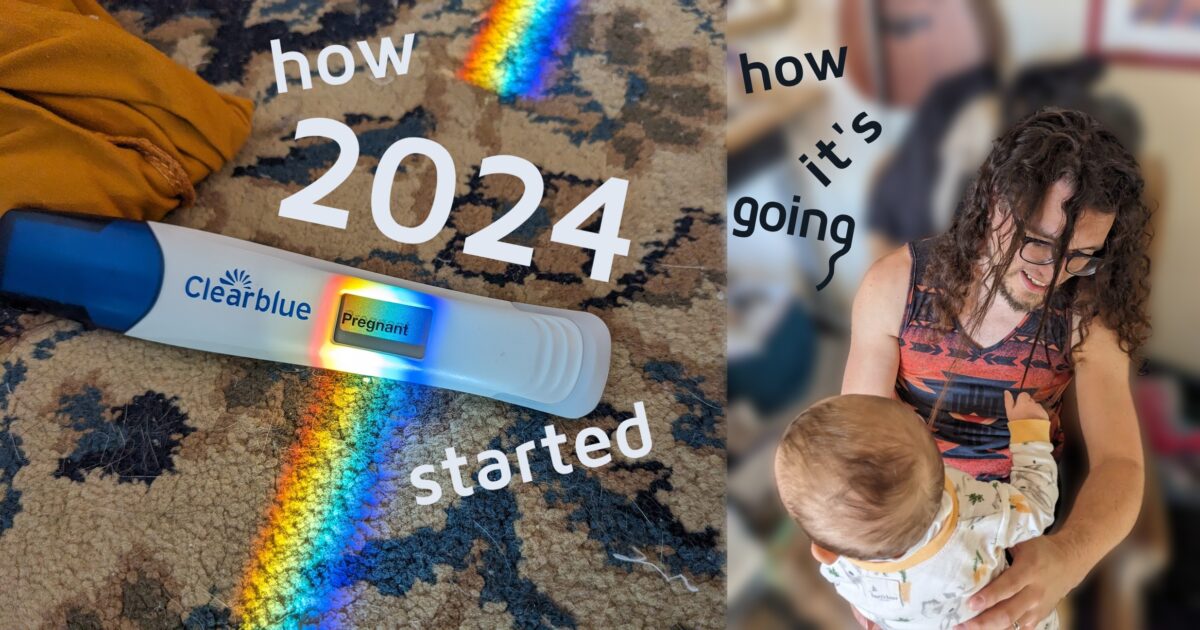
Instead, however, I find myself dictating large chunks of this post using wisprflow transcription (which can keep up with me at >200wpm with background music!) plus a foot pedal keyboard with three buttons: [tab, dictate, and enter] while feeding my baby daughter. And that feels like a great place to start in terms of what has the year been like. My year has been a year characterized by coming into contact with nascent intelligence, notably:
The fact that Jess was pregnant was a detail omitted from last year’s yearly review, since we hadn’t told more than a few family and friends at that point. The previous year, I omitted the fact that we’d gotten engaged, for the same reason!
Anyway, the year thus began for the Ocean family with a sense of the water slowwwwly pulling back to create a massive wave that we knew would crash down and completely change our lives sometime in the summer.
“I can tell for myself” is the kind of knowing that nobody can take away from you.
Nobody can take it from you, but they can get you to hide it from yourself. They can put pressure on you to cover up your own knowings—pressure that’s particularly hard to withstand when you’re relatively powerless, as a kid is. This pressure can come from the threat of force or punishment, or simply the pain of not being able to have a shared experience of reality with caregivers if you know what you know and they don’t allow such a knowing.
Ideally, we integrate others’ word with our own sense of things, and smoothly navigate between using the two in a way that serves us and them. Others would point out where they can see that we’re confused about our own knowings, and we’d reorient, look again, and come to a new sense of things that’s integrated with everything else.
But, if you’re reading this, you were probably raised in a culture that, as part of its very way of organizing civilization over the past millennia, relied on getting you to take others’ word for it even when you could tell that something about what they you being told was off… to the point that you probably learned that your own knowing was suspect or invalid, at least in some domains.
Did you cover up your natural sense of appetite, with politeness, when parents or grandparents said “You haven’t eaten enough! You have to finish what’s on your plate.”? Did you cover up your natural sense of thirst when parents or teachers said “No, you don’t need a drink right now.”? Did you forget how to listen to the building pressure in your lower abdomen, in the face of a “You don’t have to pee! You just went!”?
Did you override your sense of relevance and honesty when someone said “You can’t say that!”? Maybe someone close to you said “You didn’t see that!” or “you didn’t hear that!” or “that didn’t happen!” — as a command, not a joke… did that make it harder to listen to your own senses or vision or hearing? Not altogether, but in situations where you could tell others wouldn’t like you to know what you know. Did someone say “Come on, you know I would never lie to you,” twisting your own sense of trust in others’ honesty and dishonesty, around the reality that you did not, in fact, know that, and (since this was coming up at all) may have been doubting it?

There’s a capacity for knowing, that every human being has, that as a society we’re out of touch with in many important domains. It’s the knowing that comes from trusting our own experience and understanding. It’s not incidental that we’re out of touch with it—our societies are largely organized around this fact. But we could organize a different kind of society where everyone is in touch with it. It’s not easy or straightforward, but it seems to me to be both possible and worthwhile.
There are various fancy terms for this kind of direct-knowing—eg “self-trust” or “trust in one’s own experience” or “wise knowing” or “gnosis”—but in this piece of writing I will speak of it in plain language: “I can tell for myself”. This phrasing is cumbersome but concrete, and forces me to be very clear about what I’m talking about rather than letting the idea float off into some vague attribute one “has” or “doesn’t have”, or some accomplishment or attainment, like “awakeness”. It’s also particularly useful for contrasting it with a different kind of knowing we can call “taking someone’s word for it”. It could also be “received knowing”. I’m particularly interested in what happens when what we can tell for ourselves seems in conflict with what someone else says, and problems that occur when we override what we can tell for ourselves by taking someone else’s word, which I’ll get into in a future piece.
All of this is part of a project you could refer to as “descriptivist epistemology”. Epistemology is the study of how we know things. Much of epistemology is sort of external and prescriptivist: it is the study of “how people should go about knowing things”. Descriptivist Epistemology instead asks: how do we actually go about knowing things? There’s a thing it feels like to know something. Where does that come from? Sometimes we discover that things we knew before, we would now consider incorrect, not because the world has changed but because we’ve learned something or matured in some way. When and why does that happen? And when someone’s very way of knowing evolves, how does it evolve? In what sense did we nonetheless “know” something that was in some sense untrue? How is this different from simply “being misled” or “being confused”?
In order to explore all of those questions, let’s first, explore, concretely and intuitively, the kinds of things that we can know for ourselves, where we don’t have to take someone’s word for it.
Here’s a wide sampling but still totally incomplete list of some examples of different kinds of direct-knowing:
» read the rest of this entry »File this one under Evolution of Consciousness studies.
I’ve been working on a new theory inspired by Andrew Cutler’s Snake Cult of Consciousness article and Eve Theory of Consciousness articles, about the evolving relationship between what you could call id, ego, and superego. I’m honestly not particularly stoked about those terms, for lots of reasons, but they do seem to roughly map onto the thing that I’m looking at, so here we go.
This post also relates to some other thinking I’ve been doing over the last few years about how egos are necessary for managing your attention & care in relation to external systems that might co-opt your attention & care if you’re too open.
Here’s part of the post in a tweet:
Andrew writes:
In Freudian terms, we had an animal id for millions of years. We then evolved a super-ego, the simulated view of society in our head. Implicitly, there was a node resolving conflicts between these competing interests: a subconscious ego. A fateful encounter with snake venom allowed someone to perceive this process and she could not unsee it. Henceforth, she perceived and identified with her ego, the agent tasked with navigating the tribe’s moral code. Or in the parlance of the time, she “became as the gods, knowing good and evil.”
That is, the Fall, from a nondual mode to one dualistically separated from an experience of flow with god-ness. Ouch. The transition from the first memetic operating system to the second.
What are we talking about with id, ego, and superego. First thing to know is that those terms made a lot more sense before they were translated from German into Latin. In Freud’s original work, they were “Es, Ich, & Über-Ich”—the it, the I, and the over-I. Now admittedly “I” is a bit unwieldy, visually and acoustically, but the translation to latin made these notions seem very weird and foreign and reified, rather than natural parts of our experience.
At any rate! It is also helpful to have these other words for them for various reasons now. Here’s my take:
The rest of this post will be exploring some of the implications of this model for the evolution of consciousness, as I see it. I’m sure I’ll see more within a few months, so I wanted to share these now while they’re fresh.
The genesis of this post came while I was visiting an old dear friend in another city and staying at an airbnb a short walk from his place. We were talking about the Snake Cult model and some related ones, and as the night got on we started talking about whether he might go home briefly, in part to pick some stuff up and in part to see his partner. And we were kind of feeling into what made sense, and then we noticed that there was a tension in him between a sense of wanting to be a good husband (by connecting with his partner, tucking them in, and helping them de-stress before bed, especially given that their work is stressful at the moment) and wanting to be a good friend (by continuing to hang out with me, uninterrupted).
» read the rest of this entry »The following is a piece I wrote a year ago. A few months back I started editing it for publication and it started evolving and inverting and changing so dramatically that I found myself just wanting to publish the original as a snapshot of where my thinking was at about a year ago when I first drafted this. I realized today that attempts to write canonical pieces are daunting because there’s a feeling of having to answer all questions for all time, and that instead I want to just focus on sharing multiple perspectives on things, which can be remixed and refined later and more in public. So, with some minor edits but no deep rethinking, here’s one take on what coercion is. And you might see more pieces here soon that I let go of trying to perfect first.
Coercion = “the exploitation of the scarcity of another, to force the other to behave in a way that you want”
The word “behave” is very important in the above definition. Shooting someone and taking their wallet isn’t coercion, as bad as it is. Neither is picking their pocket when they’re not paying attention. But threatening someone at gunpoint and telling them to hand over their wallet (or stand still while you take it) is coercion. This matches commonly accepted understandings of the word, as far as I know.
A major inspiration for this piece is Perceptual Control Theory, a cybernetic model of cognition and action, which talks about behavior as the control of perception. I’m also mostly going to talk about interpersonal coercion here—self-coercion is similar but subtler.
If someone has a scarcity of food, you can coerce them by feeding them conditional on them doing what you want. This is usually called slavery. One important thing to note is that it requires you physically prevent them from feeding themselves any other way! Which in practice usually also involves the threat of violence if they attempt to flee and find a better arrangement.
In general, a strategy built on the use of coercion means preferring that the coerced agent continue to be generally in a state of scarcity, because otherwise you would be unable to continue to control them! (Because they could just get their need met some other way and therefore wouldn’t have to do what you say!)
» read the rest of this entry »Hello to David Sauvage (cc Daniel Thorson)
I’ve just listened to your podcast interview and want to expose myself to you as someone deeply tracking the field as well.
I’m writing this letter to you from a plane flying west in a gorgeous multi-hour sunset, from Ontario to Vancouver. I’ve just wrapped up a weeklong adventure that I described in this other open letter as a meta-protocol jam, where I was interfacing with some of the people I know who are most plugged in with the leading edge of collective decision-making.

I felt huge resonance with almost everything in the podcast, even though I know very little about Occupy.
Lots of possible starting points here. Let’s use this:
The right goal is not consensus but resonance. A collective experience of the truth.
When consensus-driven decision-making works, it’s because it does this.
Absolutely. How this occurs to me is that the key difference is: consensus is allowed to be hard-blocked by dissociated narrowly-fixated left hemisphere stuff, whereas a resonance-oriented approach refuses to stop there. Though those views still need to be integrated! And there’s a huge puzzle on how to do that without losing your own view, which I’ve been investigating with my Non Naive Trust Dance framework! And I’m seeing how the moves I’ve been encouraging people to make as part of that, of naming “I can’t trust X” or “I can’t rest at ease with X”, partially helps people actually get more subjective & embodied, and to open to uncertainty.
A lot to unpack there. My NNTD framework is something I’ve developed for orienting to the creation of intersubjective truth, starting from subjective truth. One lens I have on trust is “trust is what truth feels like from the inside”. Simultaneously, trusting something means being able to be at ease in relation to it. Sometimes we generate this ease in a naive way, by suppressing our concerns, but this is unstable—when those concerns re-arise, they then disrupt apparent group consensus or even apparent resonance that was existing in denial of the concerns. As I’m articulating that right now, in relation to what I just listened to, I’m feeling the inherent relationship between truth and values—what is deeply right for us (our subjective values) aren’t arbitrary.
It seems to me that we don’t choose them so much as discover them. We discover the tradeoffs we truly want to make, and then it doesn’t even feel like a sacrifice. So the decision-making process that you outlined is one of mutual/collective discovery of what we in fact deeply want once all perspectives are heard.
» read the rest of this entry »I wrote this addressed to a learning community of a few dozen people, based in Ontario, that evolved from the scene I used to be part of there before I left in late 2020. I’m about to visit for the first time in nearly 2 years, and I wanted to articulate how I’m understanding the purpose & nature of my visit. It’s also aimed to be a more general articulation of the kind of work I’m aiming to do over the coming years.
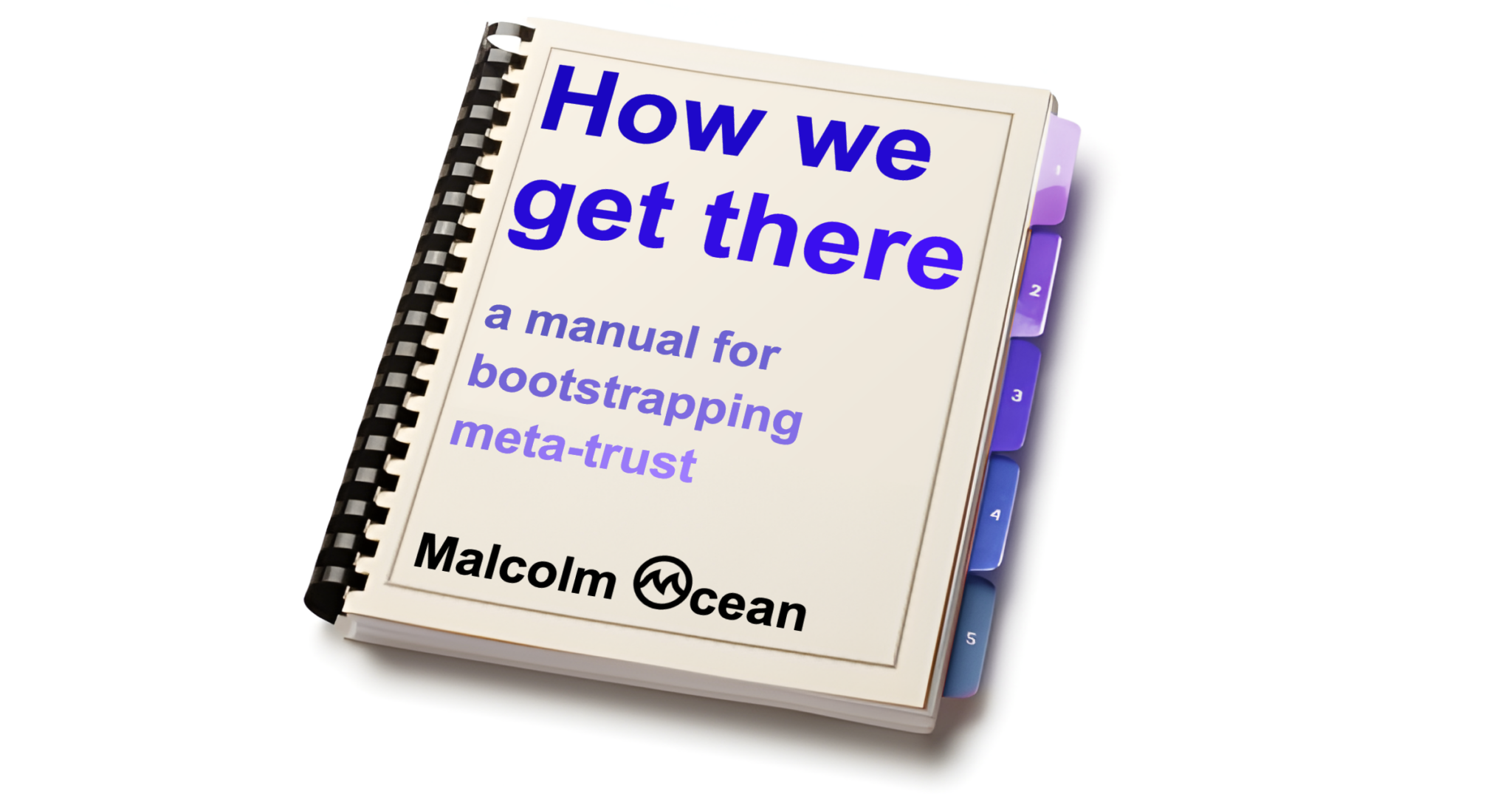
This writing is probably the densest, most complete distillation of my understandings that I’ve produced—so far! Each paragraph could easily be its own blog post, and some already are. My editing process also pruned 1700 words worth of tangents that were juicy but non-central to the point I’m seeking to make here, and there are many other tangents I didn’t even start down this week while writing this. Every answer births many new questions. See also How we get there, which begins with the same few paragraphs, then diverges into being a manual for doing this process.
To “jam” is to improvise without extensive preparation or predefined arrangements.
“Convening” means coming together, and Ontario is of course that region near the Great Lakes.
As for the “meta-protocol”…
It seems to me that: consistent domain-general group flow is possible and achievable in our lifetimes. Such flow is ecstatic and also brilliant & wise. Getting to domain-general group flow momentarily is surprisingly straightforward given the right context-setting, but it seems to me that it usually involves a bit of compartmentalization and is thus unsustainable. It can be a beautiful and inspiring taste though. (By “domain-general” I mean group flow that isn’t just oriented towards a single goal (such as what a sports team has) but rather an experience of flow amongst the group members no matter what aspects of their lives or the world they turn their attention to.)
It seems to me that: profound non-naive trust is required for consistent domain-general group flow. This is partially self-trust and partially interpersonal trust.
It seems to me that: in order to achieve profound non-naive trust, people need to reconcile all relevant experiences of betrayal or interpersonal fuckery they’ve had in their life. This is a kind of relational due diligence, and it’s not optional. It’s literally the thing that non-naive trust is made out of. That is, in order for a group to trust each other deeply, they need to know that the members of that group aren’t going to betray each other in ways they’ve seen people betray each other before (or been betrayed before). Much of this is just on the level of trusting that we can interact with people without losing touch with what we know. So we either need to find a way to trust that the person in front of us won’t do something that has disturbed us before, or that we ourselves aren’t vulnerable to it like we were before, which involves building self-trust. It takes more than just time & experience to build trust—people need to feel on an embodied level why things go the way they’ve gone, and see a viable way for them to go differently.
It seems to me that: people attempt to do this naturally, whenever they’re relating, but understanding what’s going on and how to make it go smoothly can dramatically increase the chances of building trust rather than recapitulating dysfunctional dynamics by trying to escape them.
» read the rest of this entry »